

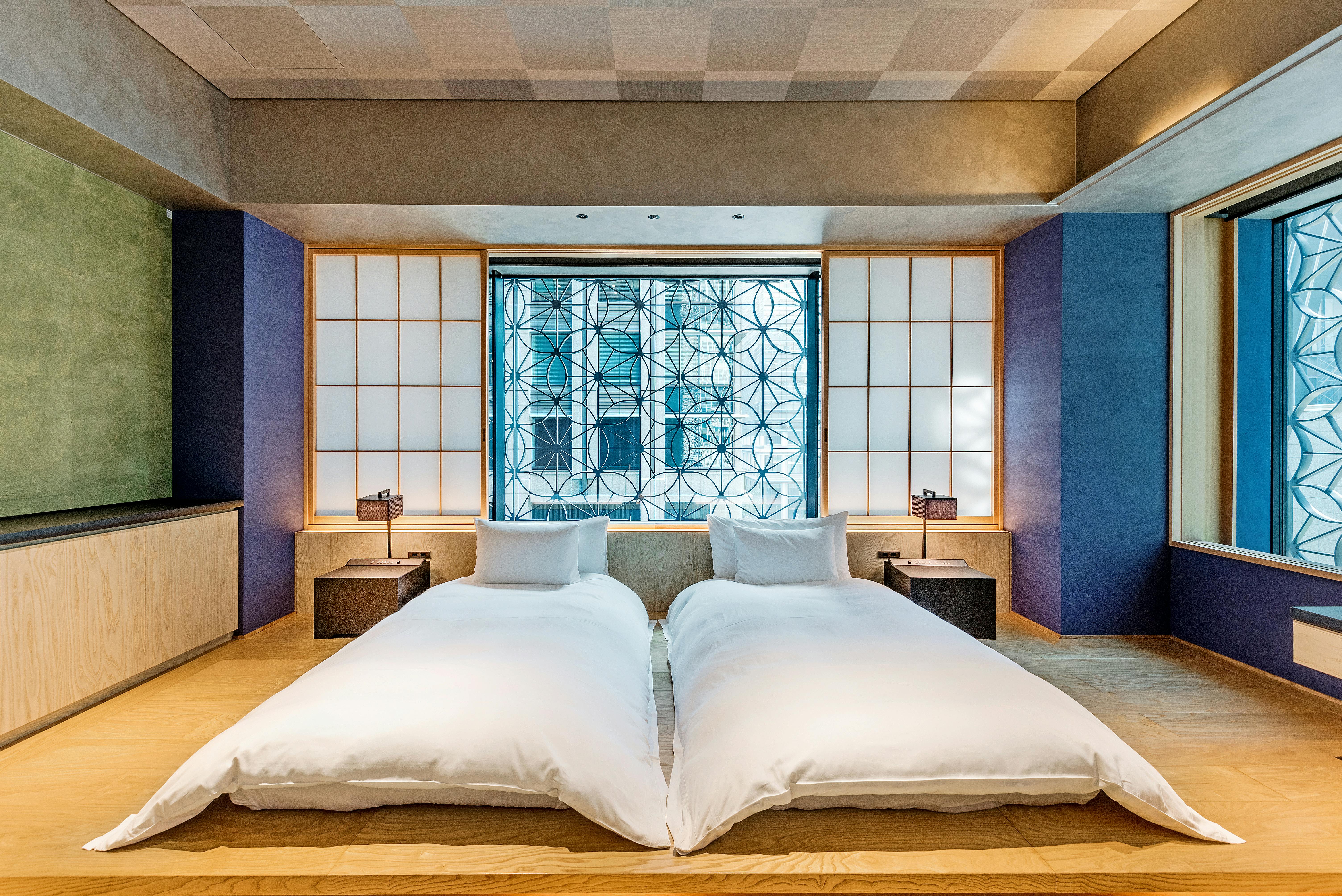
You've found the perfect hotel in Tokyo—¥8,000 per night, right in Shibuya. You're thrilled. But when you reach checkout, the bill reads ¥10,500. What just happened?
If you've ever booked accommodation in Japan, you've likely experienced this frustrating price jump. That advertised rate? It's almost never what you'll actually pay. Unlike hotels in many Western countries, where the displayed price includes most fees, Japanese hotels operate under a different system—one that can catch even seasoned travelers off guard.
The good news? Once you understand how Japan's hotel pricing works, you can budget accurately and even find ways to reduce those extra costs. Let's break down exactly why your hotel bill inflates at checkout and what you can do about it.
The Real Culprit: Japan's Multi-Layered Tax System
The primary reason for price inflation is Japan's consumption tax and additional lodging-specific fees that aren't always included in advertised rates.
Consumption Tax (10%)
Since October 2019, Japan's consumption tax has been 10% on most goods and services, including accommodation. This alone adds a significant chunk to your bill. On that ¥8,000 room, you're immediately looking at an extra ¥800.
The catch: Some booking platforms show prices inclusive of this tax, while others don't. Japanese domestic booking sites often display tax-inclusive prices, but international platforms frequently show pre-tax rates to appear more competitive.
Accommodation Tax (¥100–¥200 per person, per night)
Major cities, including Tokyo, Osaka, Kyoto, and Fukuoka, impose an additional accommodation tax:
- Tokyo: ¥100 per person per night (under ¥10,000/night), ¥200 (¥10,000–¥14,999), ¥300 (¥15,000+)
- Osaka: ¥100–¥300 per person per night depending on room rate
- Kyoto: ¥200 per person per night (under ¥20,000/night), ¥500 (¥20,000–¥49,999), ¥1,000 (¥50,000+)
These taxes fund tourism infrastructure and are collected separately from consumption tax. They're almost never included in the advertised nightly rate.
Onsen Tax (¥150 per person, per night)
Staying at a hot spring resort? Many municipalities with natural hot springs charge an additional onsen tax of approximately ¥150 per person per night. This applies even if you don't use the onsen facilities.
Service Charges and Resort Fees: The Hidden Add-Ons
Beyond taxes, many Japanese hotels—especially higher-end properties—tack on service charges and resort fees.
Service Charge (10–15%)
Upscale hotels and ryokans (traditional inns) often add a 10–15% service charge on top of the room rate. This is separate from the consumption tax and isn't a gratuity you can decline—it's mandatory.
Example breakdown for a ¥20,000/night luxury hotel in Tokyo:
| Item | Amount |
|---|---|
| Base room rate | ¥20,000 |
| Service charge (15%) | ¥3,000 |
| Consumption tax (10%) | ¥2,300 |
| Accommodation tax (per person) | ¥300 |
| Total | ¥25,600 |
That's a 28% increase from the advertised rate—a difference of ¥5,600.
Resort Fees and Facility Charges
Some resort properties charge additional "facility fees" for access to amenities like pools, gyms, or private beaches. These can range from ¥500 to ¥2,000 per person per day and are often buried in the fine print.
Booking Platform Tricks That Inflate Your Bill
The platform you use to book can significantly impact your final price—and not always in obvious ways.
Dynamic Currency Conversion (DCC)
When booking through international platforms, you might see an option to pay in your home currency at checkout. Avoid this. The conversion rates offered are typically 3–7% worse than what your credit card would give you. On a ¥30,000 booking, that's ¥900–¥2,100 in unnecessary fees.
Pre-Tax Display Tactics
Many international booking sites default to showing pre-tax prices to rank higher in search results. That ¥8,000 room becomes ¥9,100 after tax—but by the time you see that, you're already invested in the booking process.
How to spot it: Look for fine print saying "taxes and fees not included" or "+taxes" near the price. Always click through to the final booking page to see the true cost.
"Member Rates" That Aren't Better
Some platforms advertise exclusive "member rates" or "genius rates" that appear cheaper. However, these often exclude cancellation flexibility or charge higher fees at checkout. Always compare the final price against the standard rate.
Hidden Occupancy Fees
Japanese hotels frequently charge per person rather than per room. A ¥10,000 room might be ¥10,000 for one person but ¥14,000 for two. Booking platforms don't always make this clear in search results, leading to surprise charges when you add a second guest.
Budget vs. Mid-Range vs. Luxury: Real Cost Comparison
Here's what you'll actually pay across different hotel categories in Tokyo (per night, double occupancy):
| Category | Advertised Rate | Consumption Tax | Accommodation Tax | Service Charge | Total Cost | % Increase |
|---|---|---|---|---|---|---|
| Budget (Capsule/Hostel) | ¥4,000 | ¥400 | ¥200 | ¥0 | ¥4,600 | 15% |
| Mid-Range (Business Hotel) | ¥12,000 | ¥1,200 | ¥400 | ¥0 | ¥13,600 | 13% |
| Luxury (International Hotel) | ¥35,000 | ¥3,500 | ¥600 | ¥5,250 | ¥44,350 | 27% |
Key insight: Luxury properties see the steepest percentage increases due to service charges. Budget options are the most transparent, though still not tax-inclusive.
How to Avoid Overpaying: Practical Strategies
1. Book Directly with the Hotel
Hotel websites often include all taxes in their displayed rates, especially for domestic travelers. Call or email directly and ask, "Is this the final price, including all taxes and fees?" Many hotels will match or beat third-party rates when contacted directly.
2. Use Japanese Booking Sites
Platforms like Klook.com, Rakuten Travel, Jalan.net, and Ikyu typically display tax-inclusive prices and offer better deals for domestic properties. They're available in English and frequently have exclusive promotions.
3. Look for "Tax Included" Confirmation
Before finalizing any booking, search the confirmation page for phrases like:
- "Tax inclusive"
- "All fees included"
- "Total price" (not "nightly rate")
If you don't see explicit confirmation, assume taxes are extra.
4. Calculate the Real Cost Yourself
Use this formula:
- Base rate + (Base rate × 10%) + (Accommodation tax × number of guests) + Service charge (if luxury property)
This gives you a realistic budget target before you book.
5. Consider Accommodation Types with Lower Fees
- Business hotels (Toyoko Inn, APA Hotels, Dormy Inn): Minimal fees, transparent pricing
- Hostels and guesthouses: Often exempt from accommodation tax in smaller cities
- Airbnb: Subject to different regulations; may have cleaning fees but no accommodation tax
6. Stay in Smaller Cities
Accommodation taxes only apply in major tourist hubs. Staying in nearby cities (like Yokohama instead of Tokyo, or Nara instead of Kyoto) can eliminate ¥200–¥300 per person per night.
7. Pay in Yen, always.
Decline dynamic currency conversion at every step—online booking, at the hotel, at ATMs. Your credit card's exchange rate will almost always be better.
You might find this interesting: hotel reservations in Japan made through unofficial websites may be canceled.
What to Check Before You Book
Before confirming any reservation in Japan, verify:
- ✓ Is consumption tax (10%) included?
- ✓ What are the accommodation taxes for this city?
- ✓ Is there a service charge?
- ✓ Are there resort/facility fees?
- ✓ Is the rate per room or per person?
- ✓ What's the cancellation policy? (Fees can add up quickly)
The Bottom Line
That "cheap" hotel in Japan isn't trying to deceive you—it's just operating within a different pricing culture. In Japan, displaying pre-tax prices is standard practice across industries, and hotels add multiple legitimate taxes and fees that simply aren't included upfront.
The real trick isn't finding hotels without these costs (they all have them), but rather booking with platforms and methods that show you the complete picture from the start. Armed with knowledge of Japan's tax structure and booking platform tactics, you can budget accurately and avoid that sinking feeling at checkout.
Ready to book your next trip to Japan? Check out our comprehensive guides on budgeting for Japan travel and choosing the best neighborhoods to stay in Tokyo to maximize your yen and minimize surprises.
Have you experienced sticker shock at a Japanese hotel? Share your story in the comments—and let us know your booking tips!

Post a Comment
0Comments